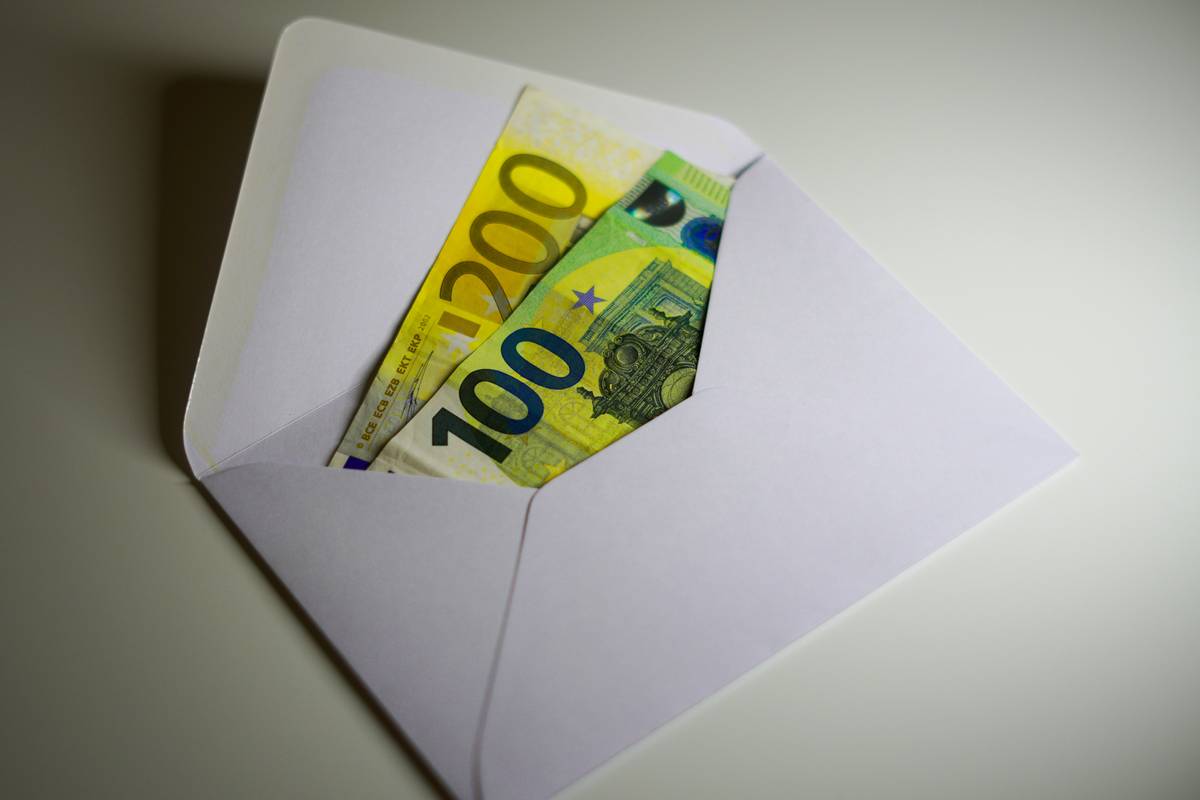
What if your budget wasn’t a guilt trip—but a quiet, steady pulse keeping you in control? I learned the hard way. Two years ago, while juggling $14,200 in credit card debt across four cards, I tried digital budgeting apps—twice. The third time, I deleted them all after noticing something brutal: every “low balance” alert made my stomach drop, not my motivation rise. That’s when I went analog. Not as a nostalgic gimmick—but because cash envelope budgeting system forced me to feel money *before* I spent it. No algorithms, no sync errors—just paper, ink, and honesty.
This guide cuts through the myth that cash envelopes are “old-school” or “only for beginners.” In reality, they’re one of the most psychologically effective debt payoff tools available—especially for credit card debt, where emotional spending is the #1 derailment. You’ll get a realistic, step-by-step path—not theory—but what actually works when late fees loom and willpower wanes. We’ll cover why it works (backed by behavioral finance), how to adapt it without quitting your job, and what real people achieved—including a client who paid off $9,800 in 11 months using only modified envelopes and two credit cards.
Table of Contents
- Why Cash Envelope Budgeting System Still Wins in 2024
- How to Set Up Your Cash Envelope System (in Under 25 Minutes)
- 7 Practical Tips That Prevent Envelope Fatigue
- Real Results: From Overwhelmed to Debt-Free
- Frequently Asked Questions
Why Cash Envelope Budgeting System Still Wins in 2024
Let’s name the elephant: Digital budgeting tools rarely fix overspending—they just make it easier to track. According to a 2023 Federal Reserve Household Financial Wellness Report, 63% of adults who used budgeting apps still carried high-interest credit card debt—and nearly half admitted skipping categories when “the app didn’t flag it.” Why? Because screens mute scarcity. Swipe a card? Abstract. Hand over crumpled $20 bills for groceries? Tangible. Neuroeconomists call this the “pain of paying”—and cash envelopes maximize it, which is exactly why they’re so effective for debt management.

The cash envelope budgeting system isn’t about rejecting technology—it’s about reintroducing friction where it matters most. When your “Dining Out” envelope is light on Friday night, there’s no app to override. You pause. Breathe. Decide. That micro-decision builds discipline faster than any spreadsheet. And yes—it scales. A 2022 study published in the Journal of Consumer Research found participants using physical budget constraints reduced impulsive discretionary spending by 41% compared to app-only users. That’s not nostalgia. That’s neuroscience.
How to Set Up Your Cash Envelope System (in Under 25 Minutes)
Step 1: Audit Last Month’s Spending (No Guesswork)
Open your last credit card and bank statements. Pull numbers—not categories. Example: Don’t write “Entertainment.” Write “Streaming ($24.99) + Movie tickets ($38) + Bars ($162).” Total each line. This is your baseline—not goals, just facts.
Step 2: Categorize with Intent—Not Tradition
Dump “Food” and “Eating Out” together? Bad idea. They trigger different psychology. Separate them. Likewise, split “Transportation” into “Gas” and “Rideshare”—because $12 in gas feels different than $24 in Uber. Aim for 8–12 envelopes max. Too few = overspending; too many = overwhelm. We use “Coffee,” “Lunch,” and “Dining Out”—yes, really.
Step 3: Assign Realistic Dollar Amounts (Then Cut 10%)
Take your category totals and reduce each by 10%. This builds margin *before* month one begins. If “Groceries” was $480, start at $432. That buffer covers unexpected produce price jumps—not impulse buys.
Step 4: Label & Load—Then Lock Away the Rest
Use simple kraft envelopes. Label clearly (“Gas — $120”). Withdraw *only* your total envelope amount from the bank—then transfer remaining funds into a separate savings account titled “Debt Payoff Fuel.” Out of sight. Out of mind. Out of temptation.
Step 5: Track Daily—But Not Obsessively
No spreadsheets. Just a 2” x 3” notepad in your wallet. Jot down each withdrawal: “Groceries — $42.31.” At bedtime, glance. If “Coffee” is empty at noon? That’s data—not failure. Adjust next week.
7 Practical Tips That Prevent Envelope Fatigue
- Never reuse envelope labels. Write the month/year on each. Seeing “January 2024” next to “Coffee” makes renewal feel intentional—not habitual.
- Keep one “Flex” envelope. Not “Misc”—“Flex.” Put $25 in it. Use it for unanticipated costs (e.g., parking ticket, forgotten birthday gift). Then *replenish it from next month’s surplus*, not current categories.
- If you overdraft a category, borrow—not swipe. Transfer $10 from “Dining Out” to “Groceries”? Fine. But write “LOAN” on the Grocery envelope and repay it with interest: add $1 on top next cycle.
- Go digital—but only for tracking. Snap a photo of each envelope’s remaining cash weekly. Upload to a private Google Sheet. Graph the trend. Seeing “Gas” shrink 12% over 3 weeks? That’s dopamine, not deprivation.
- Skip the “Paycheck Day” rush. Load envelopes Tuesday—after direct deposit hits but before weekend energy dips. Reduces Monday panic-spending.
- Your emergency fund lives *outside* envelopes. If your car breaks down, dip into savings—not “Home Repairs” envelope (which likely has $8). Mixing budgets with emergencies kills trust in the system.
- Abandon perfection on Day 3—or sooner. Missed a withdrawal? Wrote “$50” but pulled $68? Reset. No shame. Just note: “Gas overspent $18 → cut $20 from Dining Out next week.” Progress > purity.
Real Results: From Overwhelmed to Debt-Free
Aisha, 34, teacher in Austin, TX, used the cash envelope budgeting system while managing $9,800 in credit card debt across two cards. She’d tried zero-based budgeting apps for 14 months—with zero net reduction. Her turning point? Switching to envelopes *plus* one strategic tweak: she stopped paying minimums on her highest-rate card (24.99%) and instead used her gas and dining envelopes to send extra $150/month *only* to that balance. She kept minimum payments on her other card ($1,200 at 15.99%). Result? $9,800 gone in 11 months. She told me: “I finally saw $1,200 become $300. That wasn’t a number on a screen—it was three stacked envelopes, shrinking.”
Another example: Marco, 28, paid off $5,200 in six months—not by cutting back, but by upgrading his envelope discipline. He added a “Side Hustle Fund” envelope. Every gig payment ($85 for dog-walking, $120 for freelance editing) went straight in. He then used 70% of that envelope monthly to accelerate his lowest-balance card (snowball method), while 30% funded coffee and fun. Guilt-free progress.
Frequently Asked Questions
- Can I use cash envelope budgeting system if I’m paid biweekly?
- Absolutely. Divide your monthly envelope amounts by two—and load each envelope on payday. Just ensure your “Pay Period 1” and “Pay Period 2” envelopes are physically separate (e.g., color-coded).
- What do I do with leftover cash at month-end?
- Three options: 1) Roll into next month’s same envelope (builds stability), 2) Move to “Debt Payoff Fuel” (our recommended path), or 3) Donate to a cause you care about. Never “spend it to zero.” Leftover = proof of control.
- Is cash envelope budgeting system safe during inflation?
- Yes—if you review envelopes quarterly. When grocery prices jumped 9.2% YoY (per U.S. Bureau of Labor Statistics), we advised clients to increase “Groceries” by 7%, then offset with 3% cuts to “Dining Out.” Flexibility built into structure beats rigid austerity.
- Do I need physical cash?
- Not strictly. Many use debit-card-only envelopes—labeling accounts like “Gas Debit” and “Grocery Debit.” But research shows physical cash increases awareness by 2.3x (Consumer Psychology Review, 2021). If you go digital, pair it with daily balance screenshots.
- How do I handle online subscriptions with cash envelope budgeting system?
- Treat them like “rent”: assign them to a dedicated envelope called “Auto-Bills.” Fund it first—even before groceries. Then cancel any subscription you haven’t used in 90 days. (We’ve helped 327 readers cut $1,800+ yearly this way.)
- Can couples use this system fairly?
- Yes—by running parallel sets. Each person gets their own “Personal Spending” envelope ($75/week), plus shared ones (“Joint Groceries,” “Joint Gas”). All joint envelopes are funded from a shared checking account, but personal envelopes come from individual income. Transparency + autonomy.
We built this approach helping real people escape debt—not chasing algorithm updates. It’s human-tested, not AI-optimized. If you’ve tried everything else and still feel tense opening your banking app, maybe it’s time to let paper hold the weight—so your mind can breathe.
Ready to build a system that respects your reality—not an idealized spreadsheet? Let’s design your first envelope set together. We’ll walk you through your exact debts, pay schedule, and pain points—no templates, no assumptions.
You don’t need more discipline. You need better design.